



A reliable linen order starts with room standards, not a long catalogue. The aim is to define what every room needs, what is shared by housekeeping, and what is optional for a particular property type.
1. Record the actual bed sizes
Write down mattress width, length and depth for each room type. Do not rely only on labels such as Single, King Single or Queen. Fitted sheets and mattress protectors need enough pocket depth, while flat sheets need the right drop and tuck allowance. Measure a sample room when bed bases, toppers or mattress models vary.
2. Separate the linen layers
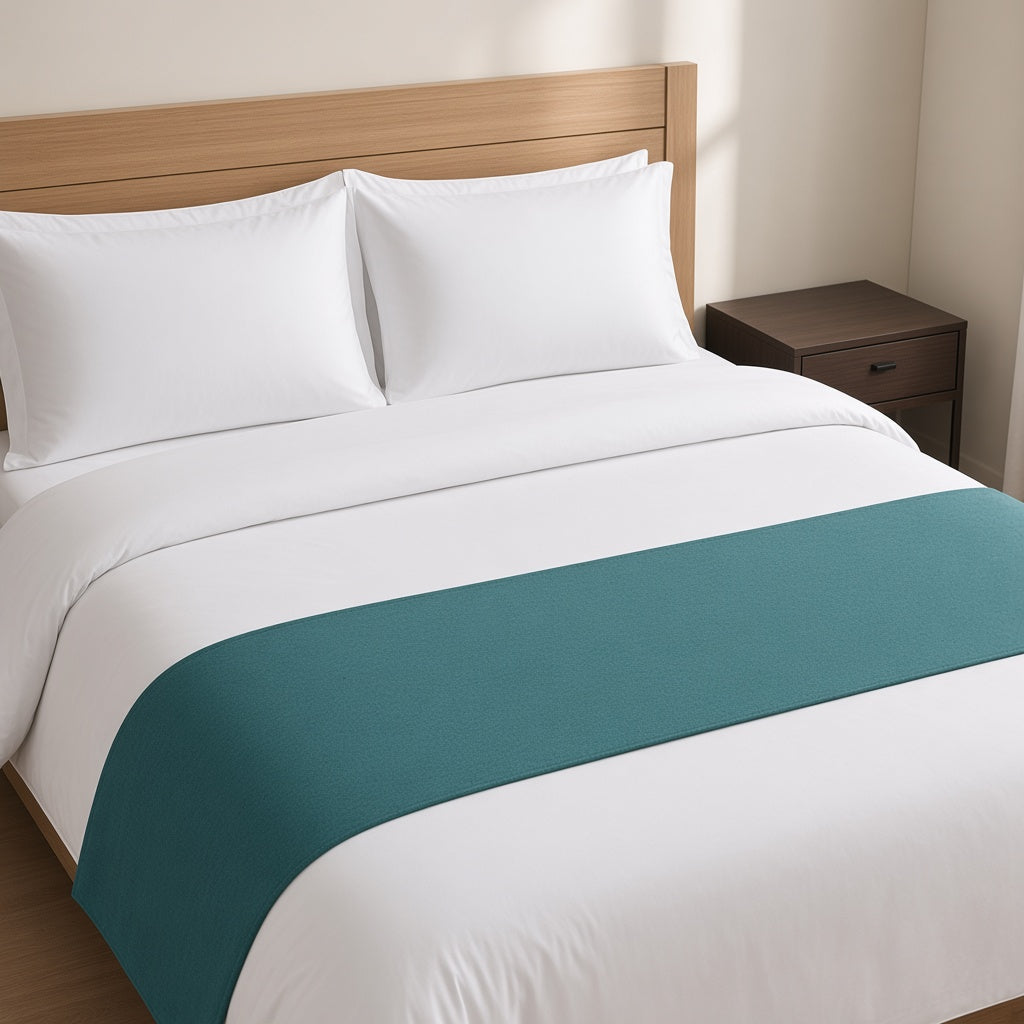
Track fitted sheets, flat sheets, quilt inserts, quilt covers, pillow inserts, pillowcases, mattress protectors and pillow protectors as separate stock lines. A pillowcase is not a pillow protector, and a decorative cushion cover is not a sleeping pillowcase. Keeping the functions separate makes replacement orders clearer.
3. Define one approved specification for each room type
For each item, record the finished dimensions, fibre content, colour, pack quantity and care requirements. Where thread count, filling weight or another technical claim matters, retain the supplier document that supports it. Avoid mixing an estimated value with an approved specification.
4. Count by usable units
Count the number of individual sheets, covers or towels available, not only the number of cartons. If an online product is sold as a six-pack, one sales unit means six individual pieces. Keep the sales-unit quantity and the individual-piece quantity in separate columns.
5. Include the laundry cycle
A working stock level must cover occupied rooms, clean storage, linen in the laundry, damaged or stained pieces under review and a replacement reserve. The right reserve depends on occupancy, turnaround time, external laundry schedules and delivery lead time. Review the assumptions instead of applying one universal number to every property.
6. Check compatibility before a large order
Test a small quantity on the actual bed and through the normal laundry process. Confirm fit after washing, closure position, shrinkage, colour consistency and whether housekeeping can identify sizes quickly. Only then standardise the item for repeat ordering.
Restocking worksheet fields
- Room type and number of rooms
- Item function
- Approved SKU and supplier
- Finished size and material
- Pack quantity
- Usable pieces on hand
- Pieces in laundry or repair
- Minimum reserve
- Reorder point and lead time
- Last verification date
Use the bedroom collection to review available bedding formats, then request a written quote when you need several sizes or products for one property.